
Quick Assessment: Temporary Window Privacy Film for Rentals
Can you add complete window privacy to a rental apartment without drilling curtain hardware or leaving sticky adhesive residue on the glass? Adding privacy without losing natural daylight depends on selecting non-adhesive static cling vinyl and following a wet installation method. Following our temporary window privacy film methodology, non-adhesive static cling privacy films are crafted from durable polyvinyl chloride (PVC) vinyl measuring 6 mils to 8 mils (0.15 millimeters to 0.20 millimeters) thick. These films provide daytime and nighttime visual screening while maintaining 65% to 85% visible light transmission (VLT) and blocking 84% to 99% of harmful ultraviolet (UV) rays. Privacy film rolls are available in standard widths of 17.5 inches, 23.6 inches, and 35.4 inches with roll lengths of 78.7 inches. Using a slip solution made from 2 drops to 4 drops of mild liquid soap mixed into 16 ounces of clean water provides 5 minutes to 10 minutes of repositioning time. On dual-pane insulated glass units (IGUs) or Low-E windows, verify that your privacy film has a total solar absorption rating under 50% to prevent thermal stress fractures caused by trapped solar heat.

Rental apartments frequently feature expansive windows that look directly onto neighboring balconies, common courtyards, or busy street sidewalks. While natural daylight is one of the most desirable features in an apartment, living in direct view of neighbors often forces tenants to keep heavy blinds or blackout curtains permanently drawn, turning sunny living rooms into dark, cave-like spaces.
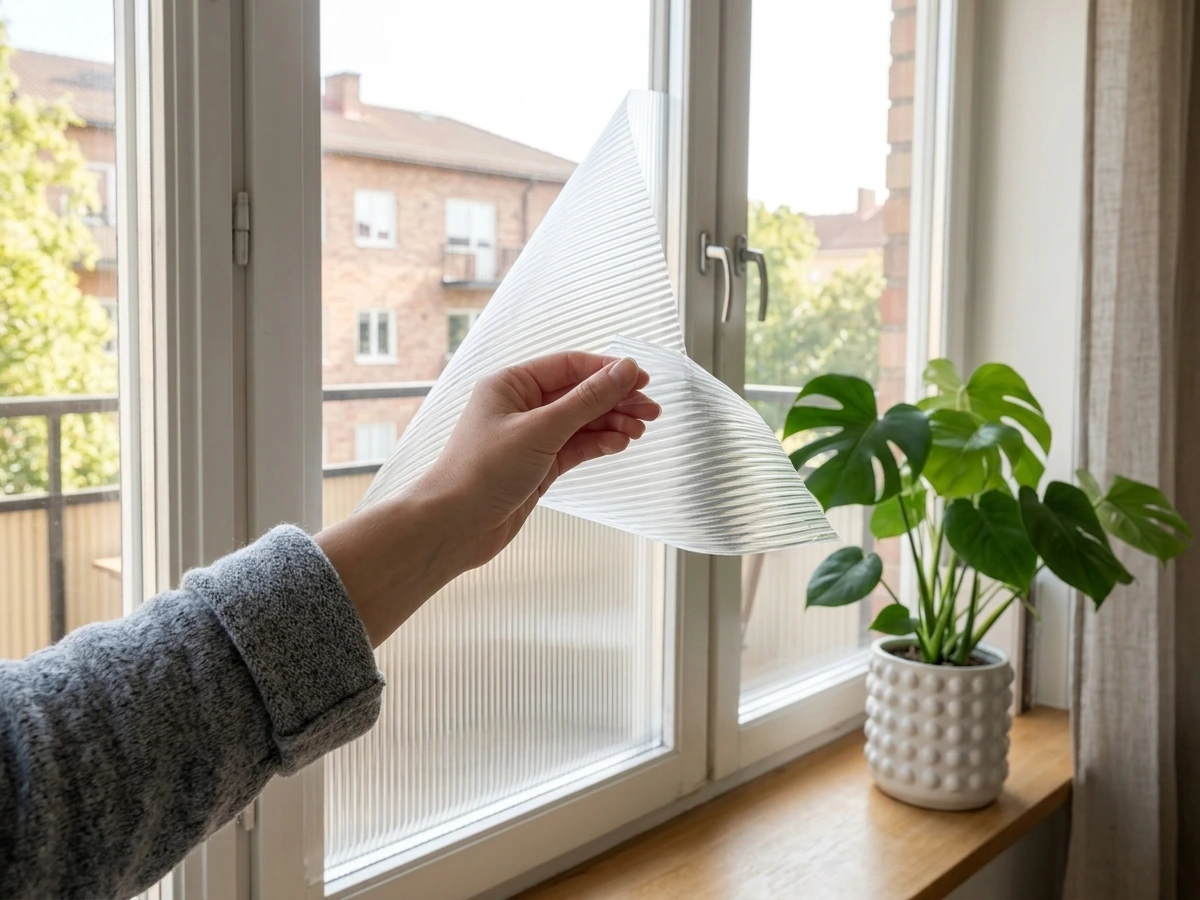
Temporary window privacy film provides renters with daytime and nighttime privacy without drilling holes for curtain rods or sticking aggressive adhesive glues to rental glass. Reliable adhesion and clean removal depend on proper glass cleaning, squeegee technique, and suitable temperature conditions. Unlike commercial adhesive tints that bake onto the glass over time, electrostatic vinyl clings to smooth glass surfaces using water tension and atmospheric pressure, lifting cleanly away when your lease ends without leaving sticky residue behind.
Table of Contents
Glass Feasibility: Thermal Stress, Double-Pane IGUs, and Substrates
Before applying any window film to rental glass, inspecting the window type, solar orientation, and glazing seal condition protects against cracked glass panes and lease penalties:
- Thermal Stress on Dual-Pane Windows: On dual-pane insulated glass units (IGUs) or Low-E windows, verify that your privacy film has a total solar absorption rating under 50% to prevent thermal stress fractures caused by trapped solar heat. Dark tinted or highly reflective solar films absorb solar radiation, heating the center of the glass while the edges remain cool within the frame. Light-transmitting frosted, reeded, or sandblasted films stay well below this limit.
- Perimeter Expansion Gap Requirement: Trim the film perimeter leaving a uniform expansion gap of 1/16-inch to 1/8-inch (1.5 millimeters to 3 millimeters) away from window frame gaskets or silicone glazing beads to accommodate thermal expansion and prevent edge curling. Sizing the film tightly against rubber gaskets traps moisture and causes the vinyl edge to buckle.
- Application Temperature Window: Install window film when ambient glass temperatures are between 50°F and 85°F (10°C to 29°C) to prevent premature drying of the slip solution or stiff vinyl handling. In cold winter weather or under direct baking summer sun, wait for moderate morning or evening temperatures before applying.
- Glass Substrate Cleanliness: Clean the window glass thoroughly with 70% isopropyl alcohol and a lint-free cloth, allowing 5 minutes of drying time before misting with slip solution. Airborne dust specks, paint overspray, or grease film create persistent air pockets under the vinyl sheet.
- Static Cling vs Adhesive Film Verification: Ensure that the product packaging states non-adhesive static cling. Adhesive-backed window films require toxic chemical removers or razor scrapers to remove, which risks scratching rental glass.
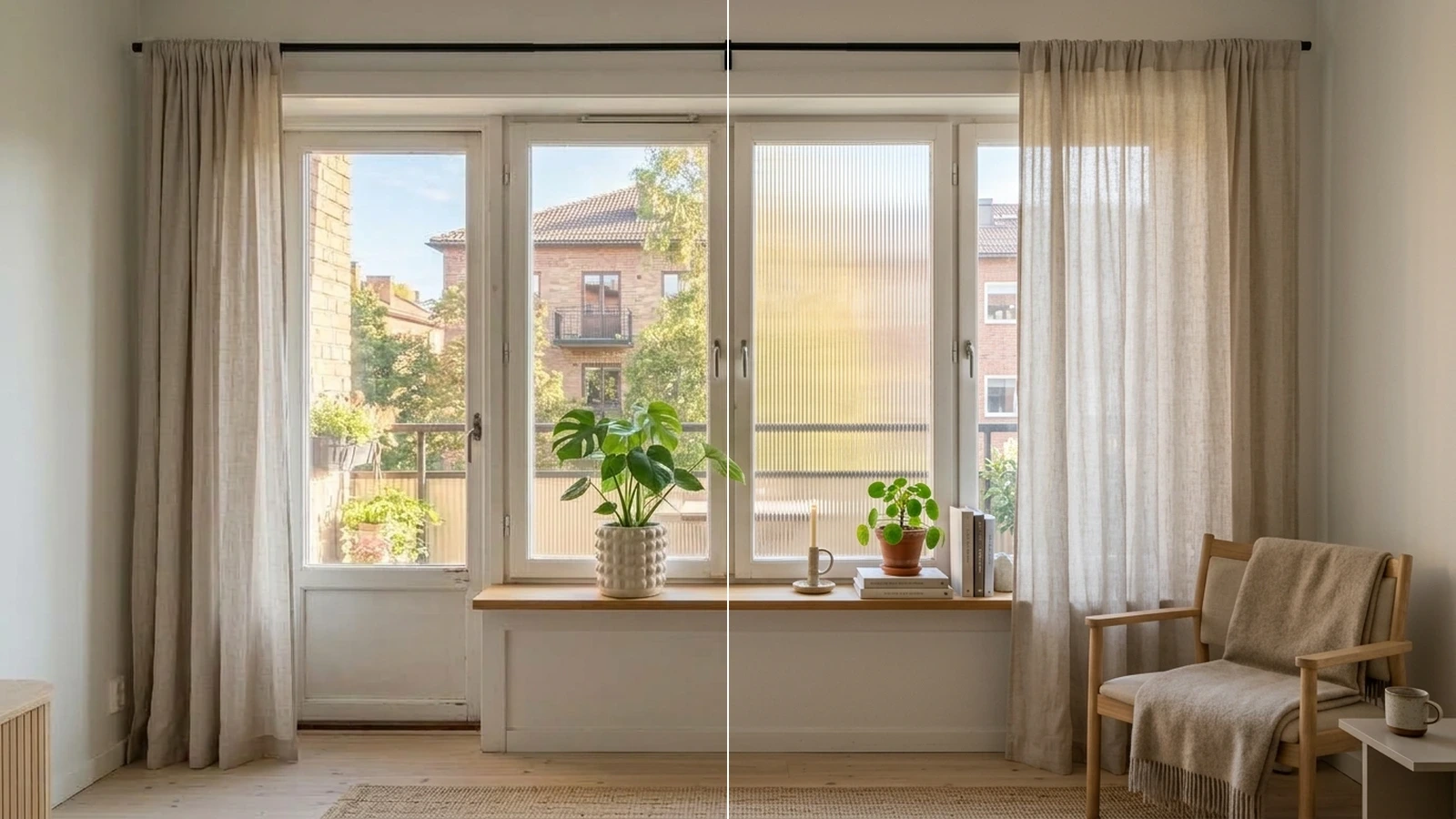
Window Privacy Film Comparison Matrix
Different privacy film patterns provide distinct optical properties, light diffusion qualities, and aesthetic styles. The comparison matrix below details the four primary patterns for rental apartments:
| Film Pattern & Style | Light Transmission & Privacy | Material Thickness | Glass Compatibility | Best Rental Application |
|---|---|---|---|---|
| Fluted / Reeded Glass Film (Recommended) |
Translucent frosted and reeded privacy films deliver 65% to 85% visible light transmission (VLT) while blocking 84% to 99% of harmful ultraviolet (UV) rays | Non-adhesive static cling privacy films are crafted from durable polyvinyl chloride (PVC) vinyl measuring 6 mils to 8 mils (0.15 millimeters to 0.20 millimeters) thick | Safe for single and dual-pane IGUs; total solar absorption under 50% | Living room street-facing windows, home offices, balcony French doors |
| Pure Sandblasted Matte Frost | Translucent frosted and reeded privacy films deliver 65% to 85% visible light transmission (VLT) while blocking 84% to 99% of harmful ultraviolet (UV) rays | Non-adhesive static cling privacy films are crafted from durable polyvinyl chloride (PVC) vinyl measuring 6 mils to 8 mils (0.15 millimeters to 0.20 millimeters) thick | Safe for single and dual-pane IGUs; total solar absorption under 50% | Rental bathroom window sashes, ground-floor bedroom windows |
| Prismatic Rainbow Mosaic Film | Translucent frosted and reeded privacy films deliver 65% to 85% visible light transmission (VLT) while blocking 84% to 99% of harmful ultraviolet (UV) rays | Non-adhesive static cling privacy films are crafted from durable polyvinyl chloride (PVC) vinyl measuring 6 mils to 8 mils (0.15 millimeters to 0.20 millimeters) thick | Safe for single and dual-pane IGUs; total solar absorption under 50% | Sunny south-facing accent windows, plant corners, decorative transom glass |
| Dark Solar Heat Control Tint (Caution for Renters) |
Low light transmission; high solar absorption; dark mirror reflection | Thin polyester sheet; often uses permanent pressure adhesive | Can exceed 50% absorption limit; potential thermal stress risk on double-pane glass | Not recommended for rental units due to glass warranty and removal liabilities |
Renter Decision Framework: Choosing Your Privacy Style
Selecting the right privacy film depends on your specific room layout, natural light orientation, and privacy needs:
- Choose Fluted / Reeded Film IF: You want an architectural mid-century look that blurs outdoor silhouettes while allowing bright, direct morning and afternoon sunlight to fill the room.
- Choose Matte Sandblasted Frost IF: You require maximum obscurity for a ground-floor bathroom window or bedroom sash where silhouettes must remain completely concealed day and night.
- Avoid Dark Reflective Solar Tints IF: You have modern dual-pane windows or Low-E glass, as high solar absorption can cause thermal stress cracking and adhesive tints leave stubborn glue residue.
Essential Tools and Materials for Wet Film Installation
Achieving a smooth, bubble-free installation requires basic household items and inexpensive application tools:
- Non-Adhesive Static Cling Privacy Film: Privacy film rolls are available in standard widths of 17.5 inches, 23.6 inches, and 35.4 inches with roll lengths of 78.7 inches.
- Spray Bottle with Soapy Slip Solution: Mix 2 drops to 4 drops of mild liquid soap into 16 ounces of clean water to create a slip solution that provides 5 minutes to 10 minutes of repositioning time on wet glass.
- Felt-Edge Installation Squeegee: A dedicated plastic squeegee with a soft microfiber felt edge that glides across vinyl without scratching the pattern.
- Precision Utility Knife: A sharp break-away craft knife with fresh blades for clean perimeter cuts.
- 70% Isopropyl Alcohol & Microfiber Cloth: To remove glass grease, dust specks, and fingerprints prior to installation.
- Steel Ruler or Measuring Tape: To measure window dimensions and guide your perimeter trimming cuts.
Step-by-Step Installation: The Wet Slip Method
Follow these structured steps to install temporary static-cling window privacy film with crisp edges and zero trapped bubbles:
Step 1: Thoroughly Clean and Prep the Window Glass
The primary cause of bubbling and edge peeling is microscopic dust or oil residue trapped beneath the vinyl sheet. Clean the window glass thoroughly with 70% isopropyl alcohol and a lint-free cloth, allowing 5 minutes of drying time before misting with slip solution. Pay close attention to the glass perimeter corners where airborne grime and pet hair naturally collect.
Step 2: Spray Generous Slip Solution Across the Glass Pane
Mix 2 drops to 4 drops of mild liquid soap into 16 ounces of clean water to create a slip solution that provides 5 minutes to 10 minutes of repositioning time on wet glass. Mist the entire glass pane generously until water droplets coat the glass surface evenly. Having abundant slip solution allows the film to slide effortlessly into place without binding.
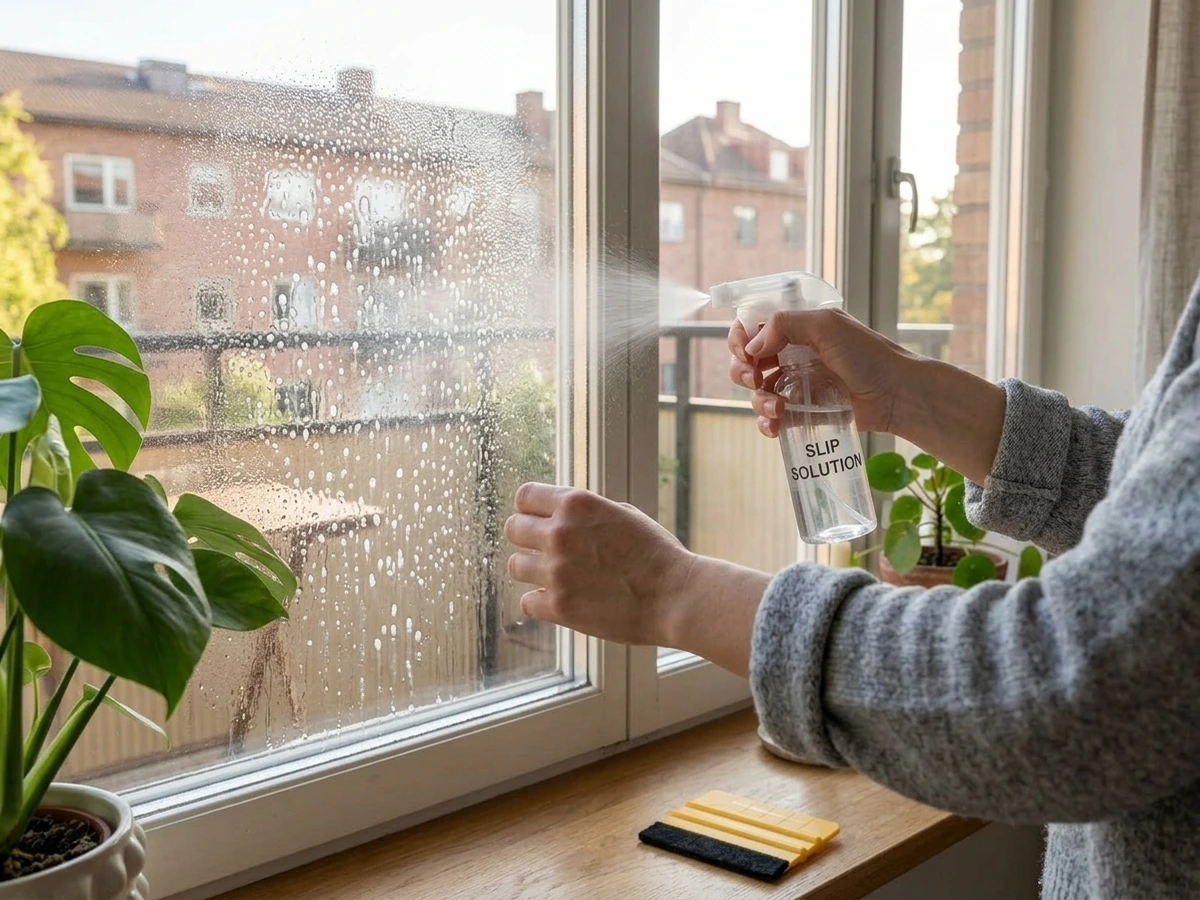
Step 3: Peel Backing Liner and Position the Vinyl Sheet
Separate the clear protective backing liner from the textured vinyl film. An easy trick is attaching two small pieces of scotch tape to opposite sides of a corner and pulling them apart. Spray the newly exposed cling side of the film with slip solution, then position the sheet onto the wet window glass. The soapy water creates a hydro-glide layer, allowing you to slide the sheet into accurate horizontal alignment.
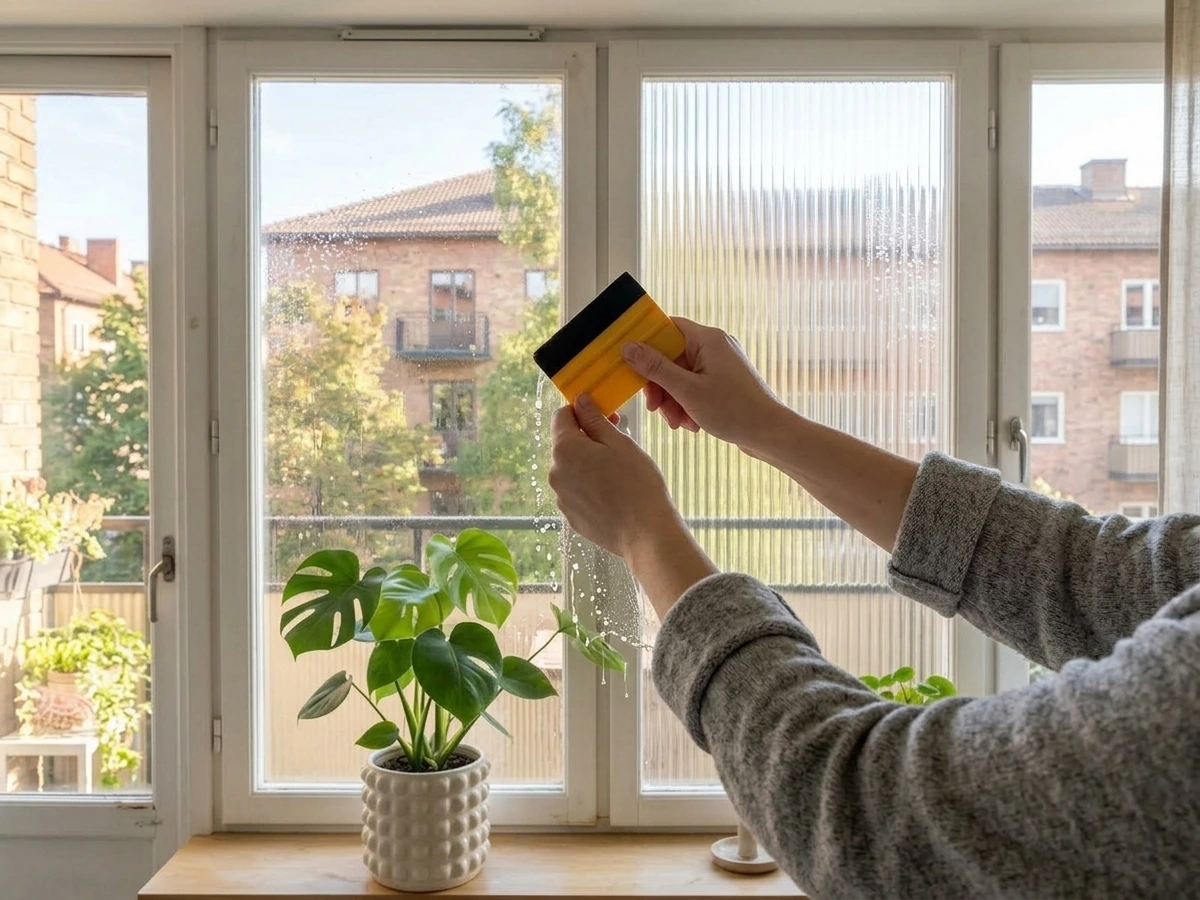
Step 4: Squeegee Water and Air Bubbles from Center Outward
Use firm overlapping passes with a felt-edge squeegee held at a 45-degree angle working from the center outward to push out trapped water and air bubbles. Start with a vertical pass down the middle to anchor the sheet, then make horizontal passes pushing outward toward the left and right edges. Keep a dry microfiber cloth handy to absorb the displaced water as it reaches the frame.
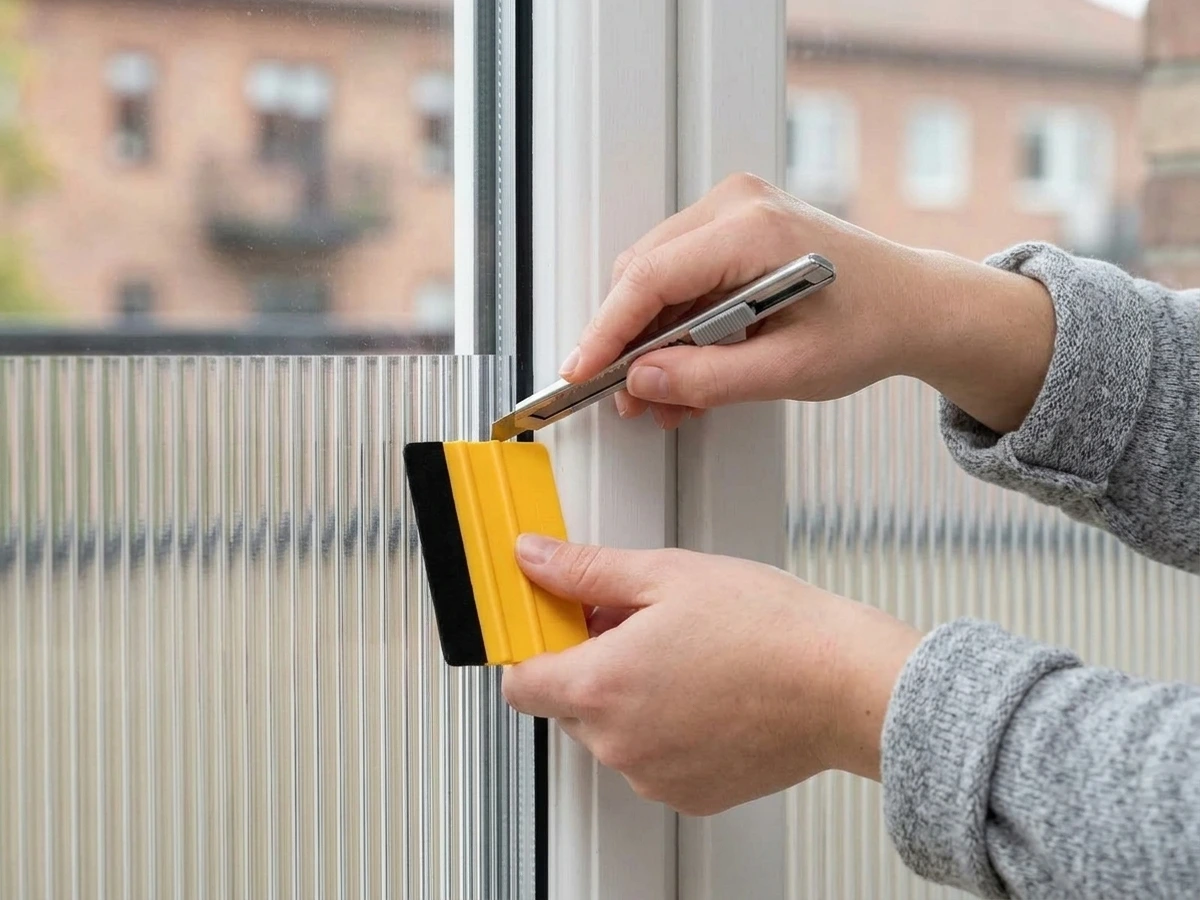
Step 5: Trim the Perimeter Leaving an Expansion Gap
Trim the film perimeter leaving a uniform expansion gap of 1/16-inch to 1/8-inch (1.5 millimeters to 3 millimeters) away from window frame gaskets or silicone glazing beads to accommodate thermal expansion and prevent edge curling. Hold the plastic squeegee against the window frame as a guide, and draw your sharp utility blade along the squeegee edge. Remove the trimmed vinyl strips and complete a final squeegee pass along the border.
Move-Out Removal: Clean Peeling and Film Storage Protocol
When move-out day arrives, removing static-cling window privacy film takes only a few minutes per window and leaves zero sticky residue:
Safe Move-Out Removal Procedure
- Lift a Top Corner: Use a fingernail or plastic scraper edge to gently lift an upper corner of the vinyl sheet away from the window glass.
- Peel Back Slowly: Peeling the film slowly at a 180-degree angle from a top corner leaves zero adhesive residue on the window glass, allowing the vinyl sheet to be rolled on a core for reuse. The flexible vinyl releases smoothly without tearing.
- Roll for Future Use: Lay the sheet flat on a clean table, lightly mist the cling side with clean water, and roll it onto its original cardboard tube with the protective liner for your next rental home.
- Wipe Glass Clean: Wipe the window glass dry with a microfiber towel. The glass will remain completely clear and ready for your landlord move-out inspection.
Real Renter Utility Audit: 9 Practical Move-Out Checks
This rental window privacy upgrade is evaluated against 9 core tenant considerations:
- Total Financial Cost: Adding temporary window privacy costs between $15 and $30, including $12 to $22 for the film roll and $5 to $8 for a squeegee and spray bottle, requiring zero power tools.
- Tool Requirements: Standard household items (spray bottle, mild liquid dish soap, utility knife, felt squeegee); no power drills or drywall screws.
- Common Failure Modes: Applying film dry without slip solution (causes severe wrinkling and trapped bubbles) or skipping the perimeter expansion gap (causes edges to curl when temperatures rise).
- Critical Renter Mistakes: Buying permanent adhesive tint instead of static-cling vinyl, which requires razor scraping and chemical cleaner washes upon move-out.
- Move-Out Removal Process: Takes only a few minutes per window sash with zero chemical cleanup.
- Lease Agreement Compliance: Fully compliant with standard lease rules because no building hardware is modified and glass remains unaltered.
- Substrate Compatibility: Compatible with all standard smooth residential glass panes; not suitable for textured, frosted, or patterned glass.
- Poor Product Choices: Dark heat-absorbing automotive tint films that can exceed the 50% solar absorption threshold and cause thermal stress cracking on dual-pane rental windows.
- Renter Alternatives: Tension-rod sheer curtains, no-drill blinds brackets, or freestanding privacy folding screens.
Related Rental Upgrade Guides
Explore our companion guides for rental-friendly upgrades:
- How to Hang Curtains Without Drilling: Mount window drapery using tension rods and tap-in brackets.
- Wireless Puck Light Sconce Hack: Add accent wall sconces without junction boxes.
- Renter-Safe Removable Wallpaper: Transform rental walls cleanly with peel-and-stick paper.
- Under-Cabinet Wireless LED Lighting: Add rechargeable task lighting under kitchen cabinets.
Frequently Asked Questions About Rental Window Films
Does static cling window film provide privacy at night when lights are on?
Textured frosted, reeded, and embossed privacy films blur indoor shapes into indistinct diffused silhouettes day and night. While exterior onlookers may see soft light or vague movement when room lights are on, detailed shapes and facial features remain completely obscured.
Can static cling window film cause double-pane rental windows to crack?
On dual-pane insulated glass units (IGUs) or Low-E windows, verify that your privacy film has a total solar absorption rating under 50% to prevent thermal stress fractures caused by trapped solar heat. Translucent frosted and fluted films reflect or transmit most sunlight, making them safe for standard residential double-pane windows.
How do you prevent window privacy film from peeling at the corners?
Trim the film perimeter leaving a uniform expansion gap of 1/16-inch to 1/8-inch (1.5 millimeters to 3 millimeters) away from window frame gaskets or silicone glazing beads to accommodate thermal expansion and prevent edge curling. Cleaning glass thoroughly with 70% isopropyl alcohol and using abundant soapy slip solution during installation ensures lasting edge adhesion.
Can you reuse static cling window film in your next apartment?
Peeling the film slowly at a 180-degree angle from a top corner leaves zero adhesive residue on the window glass, allowing the vinyl sheet to be rolled on a core for reuse. Lightly mist the cling side with water, roll it onto a cardboard tube, and reapply it in your next rental home using fresh slip solution.
Does static cling window film damage window glass or leave sticky glue?
No. Static cling vinyl uses zero pressure-sensitive chemical adhesives. It clings purely through electrostatic force and surface water tension, meaning it leaves completely clear, residue-free glass upon removal.
