
Reader Disclosure: This post contains affiliate links. When you purchase through our links, we may earn an affiliate commission at no extra cost to you.
Can you hang curtains without drilling in a rental apartment?
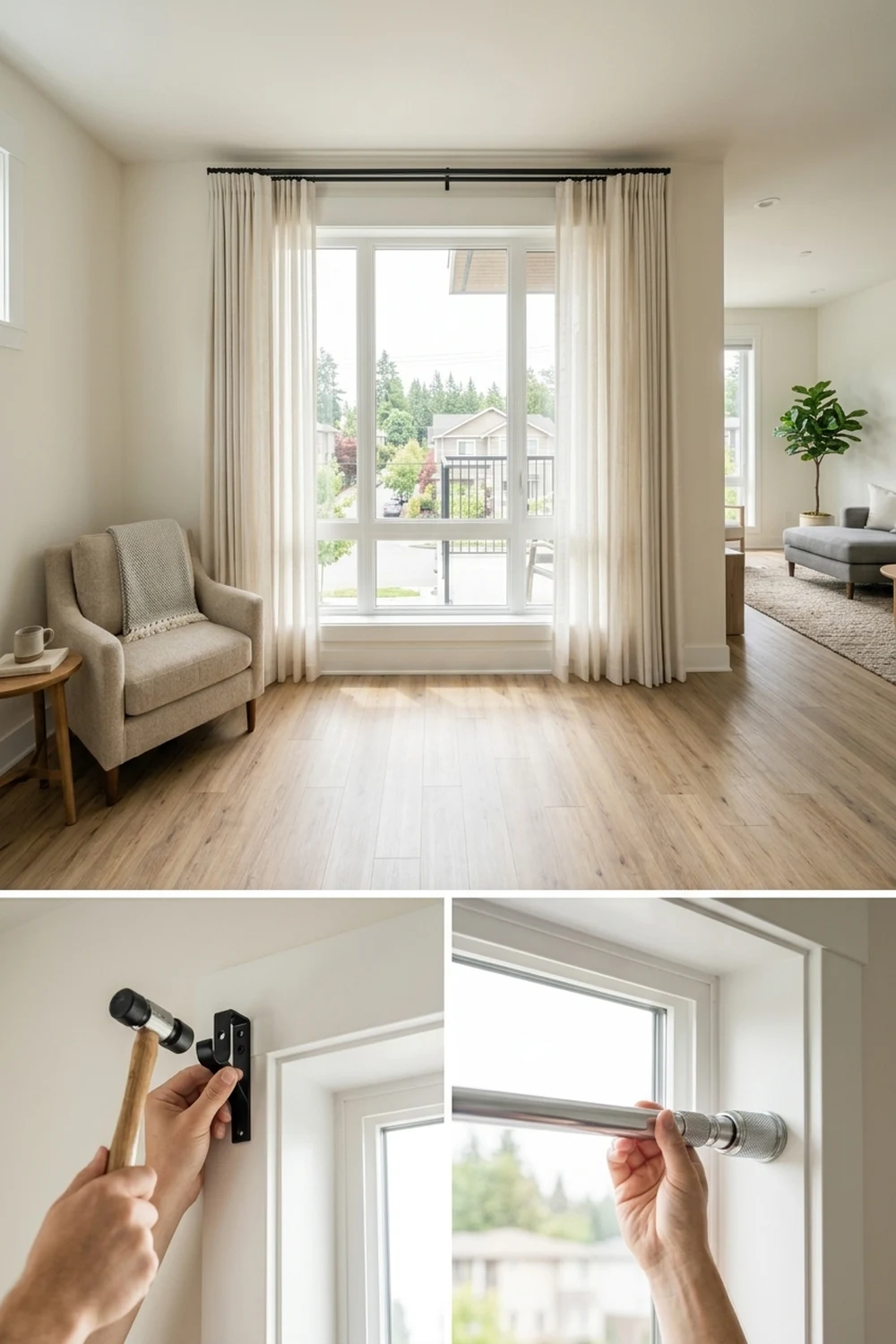
Yes. Renters can hang curtains without drilling into drywall anchors by choosing hardware matched to their window trim, recessed jambs, or existing blind headrails. Tap-in brackets support up to 20 pounds per pair on wood trim. Heavy-duty spring tension rods support up to 15 pounds inside recessed window frames. Blinds-attachment brackets clip over existing blind headrails, and adhesive hooks support lightweight rods up to 5 pounds per pair on smooth painted drywall. Clean removal depends on wall preparation, trim soundness, and proper removal technique.

Hanging curtains is one of the most effective ways to soften room acoustics, block drafts, and add privacy to a rental apartment. However, standard drapery installation requires drilling deep anchor holes into drywall studs. At move-out, landlords frequently charge tenants for spackling and repainting patched walls.
Fortunately, you can hang curtains without drilling into drywall by selecting no-drill hardware designed specifically for your window architecture. Whether your apartment features classic wood trim casing, recessed drywall jambs, or pre-installed landlord blinds, there is a proven method to hang drapes securely and protect your security deposit.

Table of Contents
Rental Feasibility & Window Architecture Checklist
Before you hang curtains without drilling, inspect your window frame to identify which architectural system exists in your rental apartment:
- Solid Wood Window Casing (Required for Tap-In Brackets): The top edge of the window trim must provide at least 1/2 inch of flat horizontal wood surface. Brackets cannot be installed on hardwoods such as oak, PVC, MDF wrap, or decorative crown molding.
- Recessed Window Reveals (Required for Tension Rods): Tension rods require rigid, parallel vertical surfaces such as solid wood jambs, drywall returns, or tile to maintain spring clamping force.
- Ferrous Steel Surfaces (Required for Magnetic Rods): Magnetic curtain hardware requires ferrous steel entry doors or magnetic steel casings. Test your surface with a refrigerator magnet before purchase, as magnetic hardware will not adhere to aluminum.
- Sound, Cured Paint (Required for Adhesive Hooks): Adhesive curtain hooks require flat, non-textured painted drywall. If the apartment wall was recently repainted, wait at least 7 days before applying adhesive strips.
- Indoor Operating Temperatures: Apply Command strips indoors between 50°F and 105°F for reliable adhesion.
At-a-Glance Hardware Comparison Table
Review manufacturer load limits and compatibility before selecting no-drill drapery hardware for your rental space:
| Hardware Type | Advertised Load Limit | Compatible Window Architecture | Surface Contact & Removal |
|---|---|---|---|
| Tap-In Corner Brackets (Kwik-Hang Single Brackets) |
Up to 20 pounds per pair | Solid wood trim (minimum 1/2 inch flat top ledge) | Two steel pins tap into top horizontal trim face; lifts straight off with no front holes. |
| Heavy-Duty Spring Tension Rods (Kenney Heavy-Duty Tension Rod) |
Up to 15 pounds | Deep recessed openings with rigid, parallel jambs | Rubber end caps compress against window jambs; leaves no screw holes when removed. |
| Blinds-Attachment Brackets (The NoNo Bracket) |
Matches existing blind headrail security | Outside-mounted metal headrails (1.5 inches to 2 inches deep) | Clamps over existing blind headrail; zero contact with drywall surfaces. |
| Adjustable Magnetic Rods (Kenney 5/8-inch Magnetic Rod) |
Up to 4 pounds | Ferrous steel doors and magnetic metal window frames | Magnetic attachment to steel surfaces; protective backing prevents surface abrasion. |
| Adhesive Curtain Rod Hooks (Command Standard Model 17053) |
Up to 5 pounds per pair | Smooth, flat painted drywall or finished wood trim | Stretch-release adhesive strips; clean removal depends on downward stretch. |
Drapery Fabric Weight & Sizing Considerations
When planning to hang curtains without drilling, drapery fabric weight is the most critical factor. Hanging heavy drapes on hardware intended only for lightweight panels leads to failure. To prevent hardware failure, categorize drapery fabric into appropriate functional classes:
- Lightweight Sheers & Unlined Linens: Translucent sheer curtains and lightweight linen panels create minimal gravitational pull. These fabrics are well suited for 5-lb rated adhesive hooks or magnetic door rods.
- Medium-Weight Cottons & Blends: Standard lined cotton panels and woven poly-blends exert moderate downward force. These fabrics perform reliably on heavy-duty spring tension rods or blinds-mounted brackets attached to securely anchored headrails.
- Heavy Blackout & Lined Velvet Drapes: Dense blackout drapery panels with thermal foam backings and heavy velvet curtains exert substantial gravitational load. These heavy fabrics exceed the capacity of adhesive hooks and require mechanical support such as tap-in brackets mounted on solid wood trim.
How to Hang Curtains Without Drilling: Tap-In Trim Brackets
For rental apartments featuring standard wooden window trim, tap-in corner brackets provide dependable mechanical support for heavy drapery panels without penetrating drywall.
According to Kwik-Hang manufacturer guidelines, Kwik-Hang rates their single curtain rod brackets to hold up to 20 pounds per pair on wood trim. These L-shaped brackets sit directly on the top horizontal ledge of your window casing. Two small steel pins tap into the top edge of the trim with a hammer, transferring the drapery load downward onto the solid wood header rather than relying on drywall anchors.
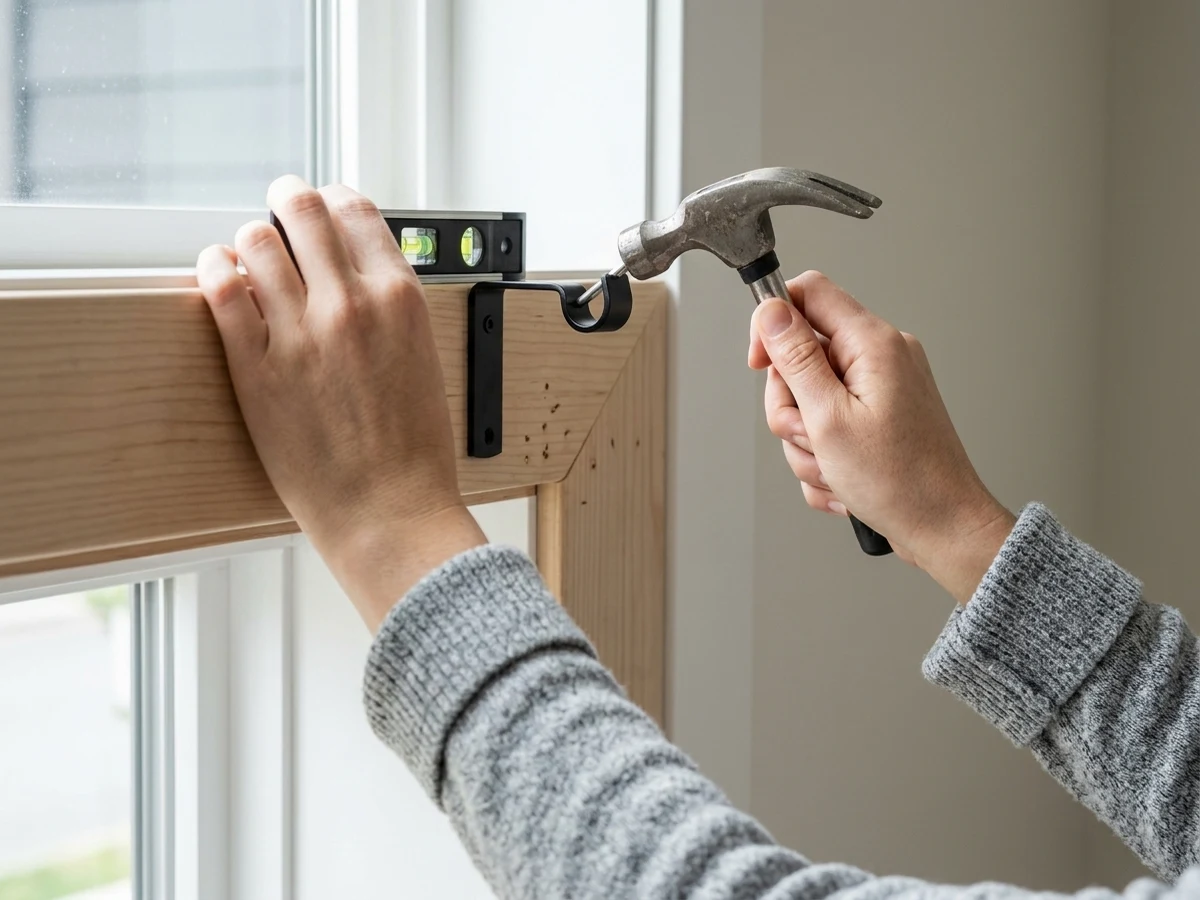
- Inspect the Top Trim: Examine the top surface of your window casing. The top edge of the window trim must provide at least 1/2 inch of flat horizontal wood surface. Do not install these brackets on hardwoods such as oak, PVC, MDF, or decorative crown molding.
- Position the Corner Bracket: Align the bracket flush against the top outer corner of the window casing.
- Tap Lightly with a Hammer: Using a household hammer, give gentle taps to set the pins into the top surface of the trim until the bracket sits flat against the molding.
- Install a Center Support on Wide Windows: Kwik-Hang recommends adding a center support bracket for windows wider than 60 inches to prevent curtain rod bowing under drapery weight.
- Removal on Moving Day: When moving out, take down your curtain rod and gently lift straight upward from beneath the bracket base to remove the pins from the top ledge without marring the visible front trim.
Method 2: Heavy-Duty Spring Tension Rods for Recessed Windows
If your rental features drywall window returns without wooden trim casing, using heavy-duty spring tension rods is an effective way to hang curtains without drilling inside the recessed opening.
Unlike lightweight shower rods that bow under fabric weight, rigid alloy steel tension rods utilize internal steel coil springs and rubber end caps to hold drapery securely. Kenney rates heavy-duty spring tension rods to hold up to 15 pounds inside recessed window frames.
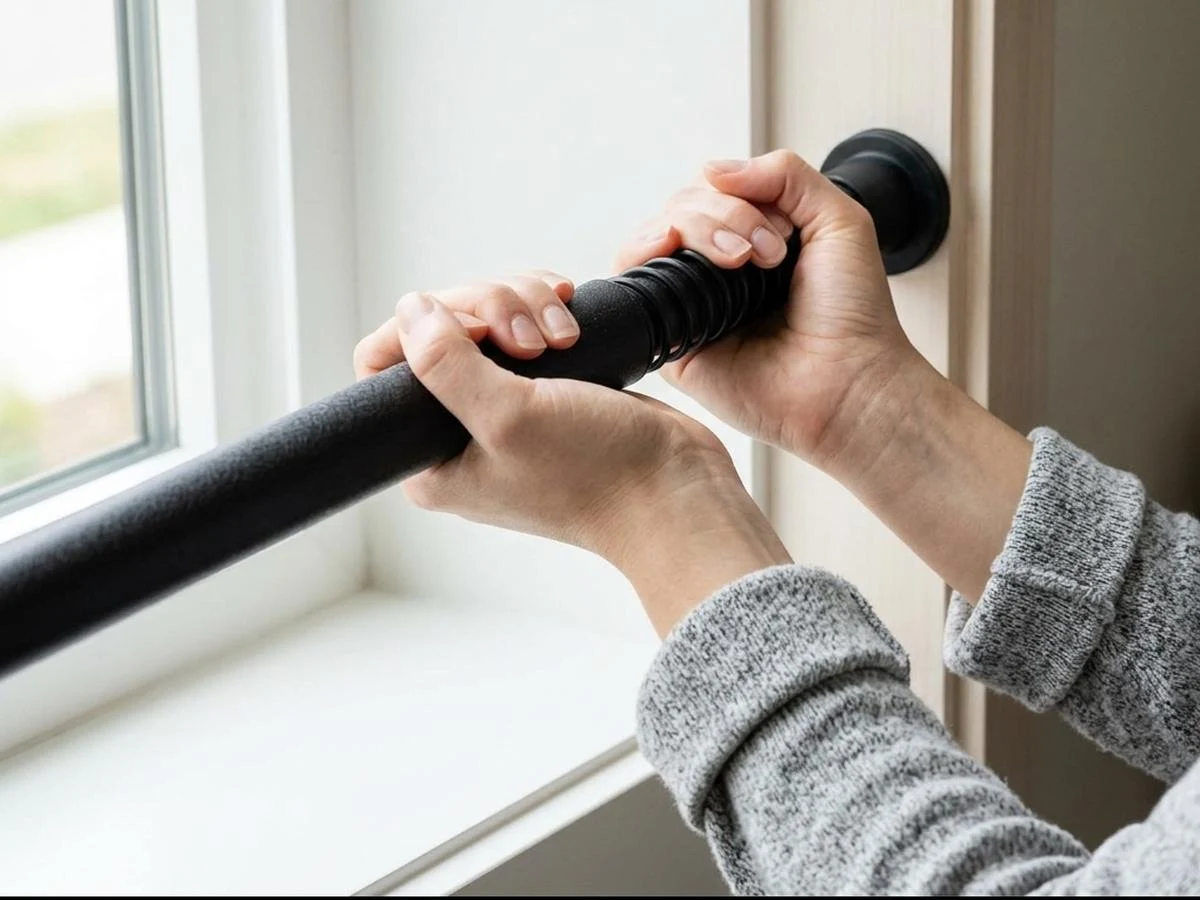
- Select a Rigid Tension Rod: Choose a steel rod equipped with a strong internal compression spring and non-marking rubber end caps. Avoid thin plastic twist-lock rods that flex under fabric load.
- Clean Opposing Jambs: Dust and surface residue reduce rubber traction. Wipe the contact points on the inner window frame with isopropyl rubbing alcohol and let them dry completely.
- Pre-Compress the Spring: Adjust the rod length slightly wider than the window opening. Compress the spring by pushing inward against the end cap, set the rod into position at your desired height, and release it so the spring drives the rubber end caps firmly against the opposing jambs.
Method 3: Blinds-Attachment Brackets for Existing Blinds
Many rental units come furnished with pre-installed horizontal or vertical blinds. Removing and storing landlord blinds risks bending slats and incurring lease penalties. Blinds-attachment brackets solve this problem by clipping directly over the top metal headrail, allowing you to hang curtains without drilling into surrounding drywall.
The NoNo Bracket fits outside-mounted blind headrails from 1.5 inches to 2 inches deep and accepts rods up to 1 inch in diameter. Use 2 brackets for windows up to 60 inches wide and 3 brackets for wider openings.
- Inspect Existing Headrail Stability: The load capacity of blinds-mounted brackets depends fundamentally on how securely the landlord’s blind headrail is anchored to the wall. Inspect the headrail mounting clips to ensure the screws are firmly seated in wood or anchors without sagging.
- Attach the Brackets: Slide the bracket over the top of the blind headrail and tighten the center adjustment screw by hand until the clamp grips the headrail firmly.
- Hang Your Curtain Rod: Place your curtain rod into the bracket hooks and distribute drapery panels evenly. Keep to lightweight or medium drapery fabrics to avoid overloading preexisting blind brackets.
Method 4: Magnetic Curtain Rods for Steel Doors
In apartments with steel entry doors or metal window casings, magnetic curtain rods provide a hardware-free way to hang curtains without drilling holes.
Kenney rates their 5/8-inch magnetic curtain rod to adjust from 16 inches to 28 inches and hold up to 4 pounds on steel doors. Select magnetic hardware equipped with protective backings to prevent direct metal-on-metal abrasion on painted steel doors during repositioning.
- Verify Ferrous Steel Material: Test your door or window frame with a household refrigerator magnet. Magnetic rods attach securely to carbon steel but will not adhere to aluminum frames.
- Position and Hang: Place the magnetic brackets directly onto the steel surface at your desired height and hang lightweight linen or sheer drapery panels.
Method 5: Adhesive Curtain Hooks for Lightweight Sheers
Adhesive curtain hooks offer a solution for smooth painted drywall where no trim or recessed jambs exist. However, renters must understand their specific product ratings and physical limitations:
According to official specifications, 3M rates Command curtain rod hooks to hold up to 5 pounds per pair for rods up to 5/8 inch in diameter and up to 48 inches long. For heavier hardware, 3M rates Command Large curtain rod hooks to hold up to 10 pounds per pair for rods up to 3/4 inch in diameter.
Dynamic Tension Restriction: Adhesive hooks are not recommended for heavy blackout curtains. While adhesive strips are rated for static vertical weight, repeated lateral drawing of heavy curtains creates cyclical peeling forces that can cause adhesive strips to detach prematurely.
- Clean Surface with Rubbing Alcohol: Wipe the smooth painted drywall with rubbing alcohol. Do not use household surface cleaners, which leave oily residue that impairs adhesive bonding.
- Press Firmly and Wait 1 Hour: Press each bracket firmly against the wall for 30 seconds, then wait 1 hour before placing the curtain rod to allow the adhesive bond to build strength.
- Follow Temperature Protocols: Apply Command strips indoors between 50°F and 105°F. If the room was recently repainted, wait at least 7 days before applying adhesive strips.
Common Mistakes That Cause Rental Curtains to Fall
- Exceeding Manufacturer Weight Limits: Attempting to hang curtains without drilling using hardware rated below your fabric weight leads to hardware failure. Be sure to calculate total combined fabric and rod weight before installation.
- Omitting Center Support Brackets: Long curtain rods experience midpoint deflection under fabric weight. When installing Kwik-Hang brackets on windows wider than 60 inches, install a matching center support bracket to maintain rod alignment.
- Mounting on Uncured Paint: Applying adhesive strips to freshly repainted rental walls before the paint film cures causes the strip to pull paint off the drywall. Verify that paint has cured for at least 7 days before applying adhesive hardware.
Emergency Move-Out Troubleshooting: If an Adhesive Tab Breaks
When removing Command adhesive hooks, pull the adhesive tab slowly straight down flat against the wall at least 15 inches until it releases. Do not pull the tab outward toward yourself, which can tear drywall paper.
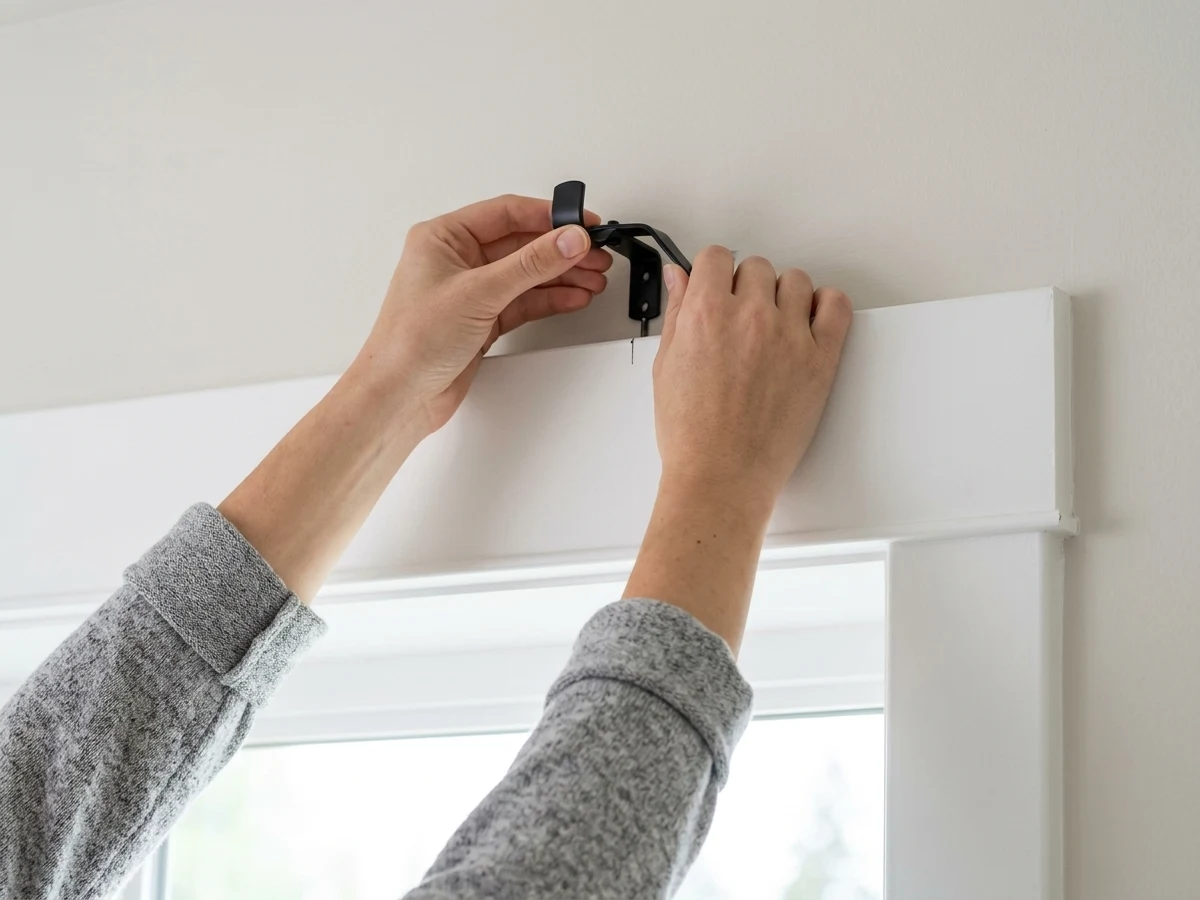
If an adhesive tab breaks flush during move-out removal, do not pry behind the bracket with a screwdriver or putty knife, which can gouge drywall paper. Instead, follow 3M Command official instructions: slide dental floss behind the bracket and gently saw through the foam strip until the bracket separates from the wall. Once the bracket is off, roll the remaining adhesive foam downward off the wall with your thumb.
Related Renter Guides
- No-Drill Gallery Wall Guide: hang picture frames without nails using adhesive strips.
- Wireless Puck Light Sconce Hack: install decorative wall sconces without electrical wiring.
- Temporary Window Privacy Films: frosted and fluted glass films for rental windows.
- Removable Wallpaper Guide: peel-and-stick accent walls that remove cleanly at move-out.
Frequently Asked Questions
Can you hang heavy blackout curtains with tension rods?
Spring tension rods can support heavy blackout curtains only if the window opening features deep, rigid vertical jambs and total curtain weight remains within hardware ratings. Kenney rates heavy-duty spring tension rods to hold up to 15 pounds inside recessed window frames. In openings with flexible drywall returns or slick semi-gloss paint, tension rods can slip under lateral drawing, so cleaning contact points with rubbing alcohol and compressing the internal spring firmly during installation is essential.
Do tap-in curtain brackets damage landlord window trim?
Tap-in brackets leave two small pinpricks on the top horizontal ledge of the wood casing. Because this surface is on top of the trim header, the pinpricks do not alter the front-facing molding that faces the room. Brackets are removed by lifting straight upward from the window frame.
Can you use Command hooks for velvet blackout drapes?
No. 3M rates Command curtain rod hooks to hold up to 5 pounds per pair for rods up to 5/8 inch in diameter and up to 48 inches long. Velvet blackout curtains and rods frequently exceed this limit. Furthermore, daily lateral pulling forces from drawing heavy curtains can peel adhesive hooks from the wall.
What if my rental apartment has windows with no trim molding?
If your windows lack wooden trim molding, use a heavy-duty spring tension rod inside the recessed drywall reveal. If pre-installed mini-blinds are present, use blinds-attachment brackets that clip over the existing headrail.
