
Quick Assessment: Heavy-Duty Rental Entryway Storage
Can you build a heavy-duty entryway organizer in a rental apartment without drilling into drywall or risking your security deposit? Establishing high-capacity entryway storage depends on floor leveling, vertical clearance, and non-destructive load dispersion hardware. Following our heavy-duty rental entryway organizer methodology, residential egress guidelines recommend maintaining an unobstructed entry corridor width of at least 36 inches along main entrance paths, while baseboards typically measure 3 inches to 6 inches in height. A commercial freestanding hall tree supports 200 pounds to 250 pounds on the bench, while dual-prong hooks hold 10 pounds to 15 pounds each and bottom shelves fit 6 pairs to 9 pairs of shoes. In narrow corridors, floor-to-ceiling spring-tension organizer poles span 7 feet to 10 feet (84 inches to 120 inches) to support 50 pounds to 70 pounds of vertical hanging gear without fasteners. Adhesive furniture anti-tip safety straps deliver up to 200 pounds of dynamic shear resistance without drilling screws into drywall.
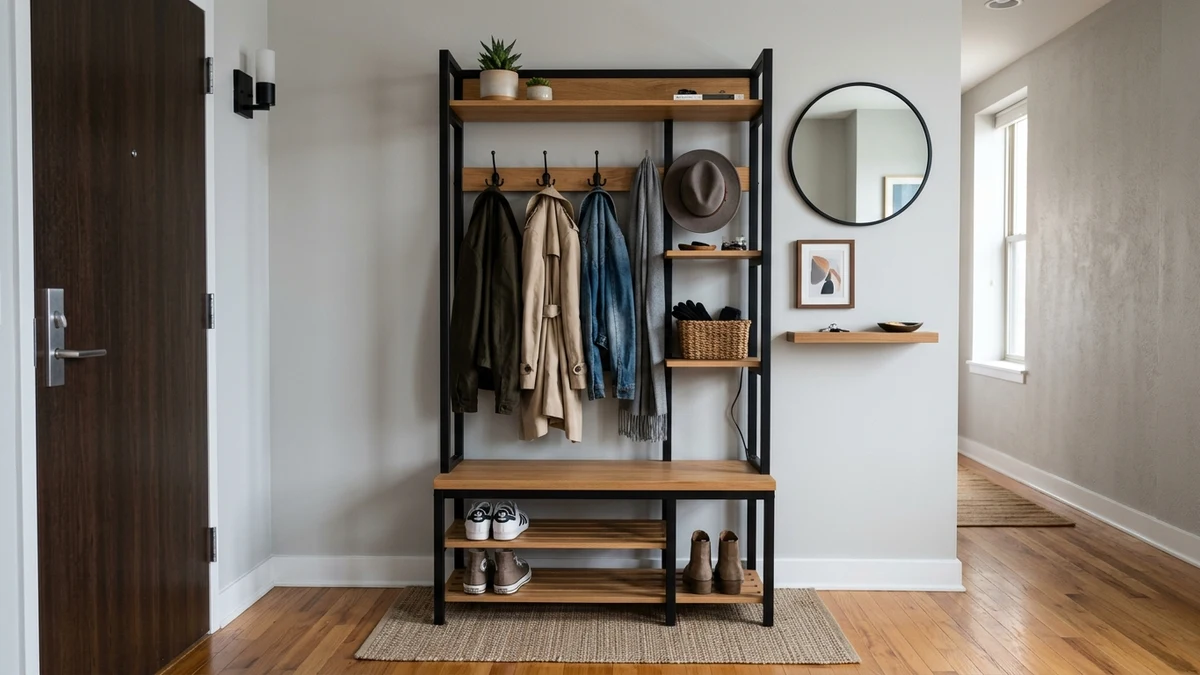
Rental apartment entryways are notorious for presenting awkward spatial challenges. Often designed as narrow, windowless corridors with minimal square footage, these high-traffic arrival zones rarely include built-in closets, mudroom cubbies, or wall-mounted coat rails. When tenants arrive home carrying heavy winter parkas, work backpacks, umbrellas, and wet footwear, items naturally accumulate on dining chairs, living room floors, and entryway baseboards.
Standard residential leases strictly prohibit driving heavy lag bolts or toggle anchors into hallway drywall to mount permanent coat racks. Anchoring heavy loads onto hollow rental drywall with improper fasteners risks tearing the gypsum core, pulling away paint layers, and triggering security deposit deductions upon lease turnover. Fortunately, by pairing freestanding structural furniture, compression-loaded vertical tension systems, and high-strength magnetic hardware, renters can establish a clean, organized mudroom drop zone without placing a single screw into landlord property.
Table of Contents
Entryway Feasibility: Evaluating Space, Obstacles, and Substrates
Before selecting or assembling entryway storage hardware, assessing physical hallway constraints and wall substrate conditions ensures that your storage installation remains stable and safe under heavy daily use:
- Floor Flatness and Slope: Older rental apartment floors often exhibit uneven settlement near entry thresholds. Floor slope deviations exceeding 0.25 inches across a 3-foot span require furniture equipped with adjustable screw-in leveling glides to establish a plumb center of gravity and eliminate frame wobble.
- Baseboard Obstruction and Offset: Standard residential baseboards typically measure 3 inches to 6 inches in height and project outward from the wall, creating an offset gap at the bottom of tall furniture. Entryway hall trees benefit from recessed rear legs or adjustable standoff pads so the vertical frame rests safely near the wall without tilting forward.
- Doorway Clearance and Egress Corridors: Residential egress guidelines recommend maintaining an unobstructed entry corridor width of at least 36 inches along main entrance paths. Ensure that shoe benches, protruding coat hooks, and storage bins do not impede front door swing arcs or restrict emergency exit pathways.
- Drywall Texture Limitations: Textured drywall surfaces reduce adhesive contact area by 30% to 50% compared to smooth walls. For heavily textured surfaces, rely primarily on freestanding weight ballasting or mechanical floor-to-ceiling tension rather than wall-mounted adhesive pads alone.
- Paint Curing Status: Newly painted apartment walls require a full curing window of 7 days to 28 days before applying heavy-duty adhesive stabilization straps. Applying adhesive pads over uncured latex paint can cause the topcoat to shear away from the drywall primer during removal.
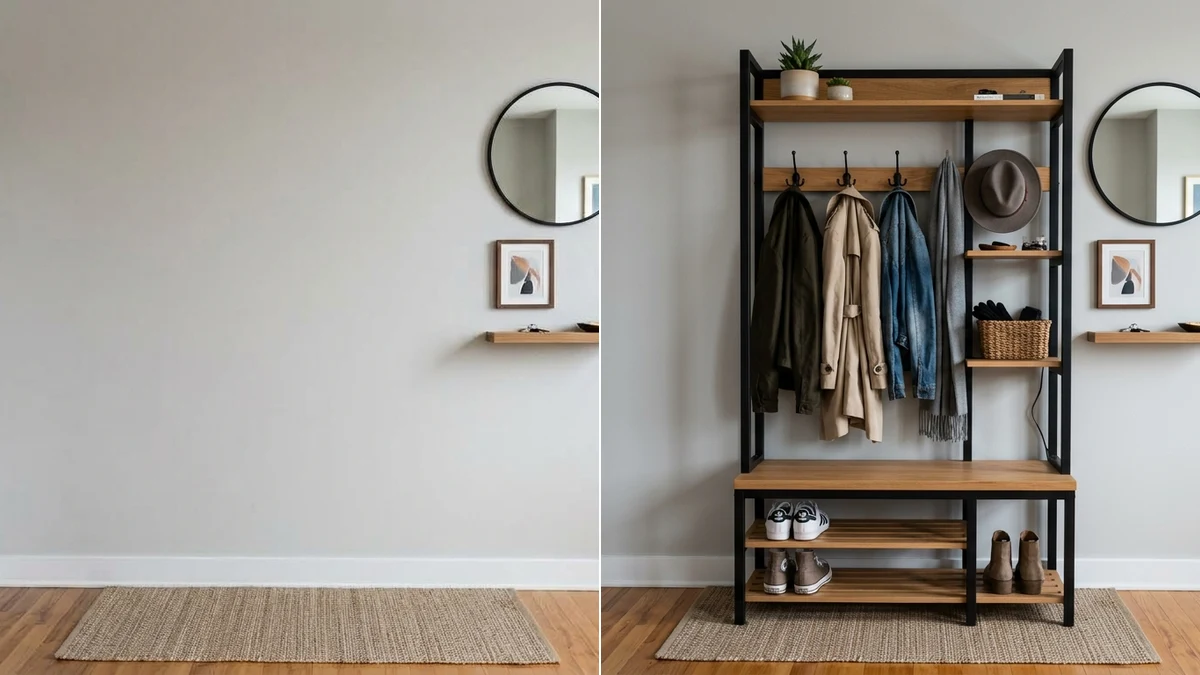
Entryway Storage System Comparison Matrix
Different entryway storage configurations provide distinct load ratings, spatial footprints, and mechanical advantages. The comparison matrix below details the four primary renter-friendly storage configurations:
| Storage System Type | Load Capacity & Dimensions | Wall & Door Mechanical Interface | Substrate Requirements | Best Rental Application |
|---|---|---|---|---|
| Freestanding Hall Tree with Bench | Supports 200 pounds to 250 pounds on the bench, while dual-prong hooks hold 10 pounds to 15 pounds each and bottom shelves fit 6 pairs to 9 pairs of shoes | Freestanding steel frame; rests on floor with silicone leveling glides | Flat or shimmed flooring; 3 inches to 6 inches baseboard clearance | Spacious entry corridors, shoe changing drop zones, heavy winter coats |
| Floor-to-Ceiling Tension Pole | Spans 7 feet to 10 feet (84 inches to 120 inches) to support 50 pounds to 70 pounds of vertical hanging gear | Vertical compression spring pressure; non-skid rubber ceiling pads | Solid flat ceiling; smooth or low-pile entryway floor surface | Narrow apartment hallways, modular bag storage, vertical hat displays |
| Heavy-Duty Neodymium Door Hooks | Delivers 25 pounds to 30 pounds of direct pull strength and 8 pounds to 10 pounds of vertical shear capacity | Magnetic attraction to interior steel entrance door; non-slip silicone pads | Magnetic ferrous metal door face; clean and oil-free finish | Apartment entry doors, dog leashes, heavy backpacks, umbrella storage |
| Over-the-Door Utility Organizer | Fits doors measuring 1.375 inches to 1.75 inches thick, holding 35 pounds to 50 pounds distributed weight | Steel bracket hook over door top; 1 millimeter to 2 millimeters thick dense EVA foam padding | Standard interior door frame; minimum operating door top gap | Coat closet doors, laundry room doors, accessory and scarf organization |
Essential Tools and Materials for Rental Hallways
Assembling a durable, non-invasive entryway mudroom setup requires heavy-duty components and surface-safe protective materials:
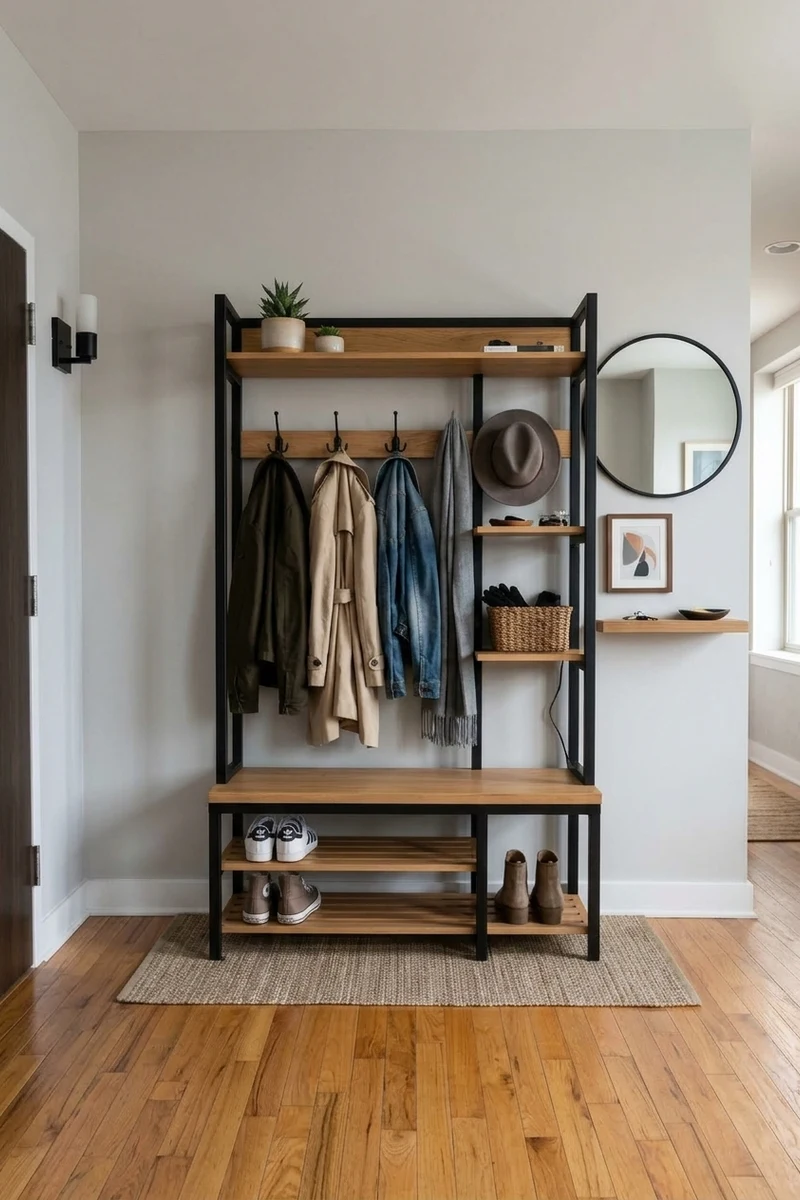
- Freestanding Steel Hall Tree: Welded tubular metal frame with an integrated wooden bench supporting 200 pounds to 250 pounds and bottom shelves holding 6 pairs to 9 pairs of shoes.
- Floor-to-Ceiling Tension Pole: Telescopic spring-loaded pole system that spans 7 feet to 10 feet (84 inches to 120 inches) to support 50 pounds to 70 pounds of vertical storage.
- Rubber-Coated Neodymium Hooks: N52 magnetic hooks providing 25 pounds to 30 pounds of direct pull strength and 8 pounds to 10 pounds of vertical shear capacity on steel doors.
- Adhesive Furniture Anti-Tip Straps: Heavy-duty safety brackets that deliver up to 200 pounds of dynamic shear resistance without drilling screws into drywall.
- High-Density EVA Foam Strips: Dense 1 millimeter to 2 millimeters thick protective foam pads to cushion metal bracket hooks.
- Surface Prep Supplies: 70% isopropyl alcohol wipe, lint-free microfiber towels, and a steel tape measure.
- Torpedo Bubble Level: Compact spirit level to calibrate adjustable screw glides and prevent furniture rocking.
Step-by-Step Installation: The No-Drill Drop Zone Method
Building an entryway drop zone that handles heavy commuter gear while keeping rental walls pristine involves five structured steps:
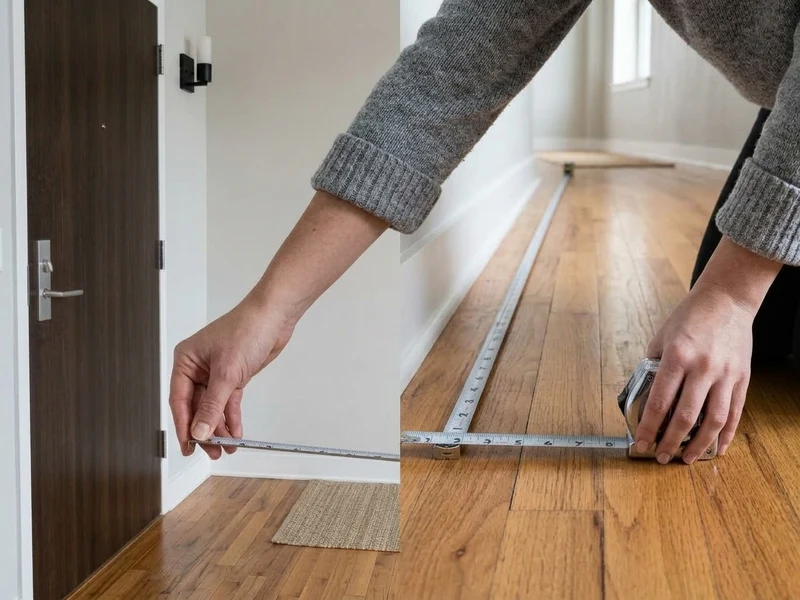
Step 1: Measure Corridor Clearances and Door Swing Radius
Begin by measuring the total width and length of your apartment entryway using a steel tape measure. To satisfy standard residential egress guidelines, verify that placing your organizer leaves an unobstructed pathway of at least 36 inches from the front door into living spaces.
Open the entrance door fully to map its swing arc. Ensure that storage benches, shoe racks, and hanging garments remain entirely outside the door path to prevent accidental collisions when entering or exiting.
Step 2: Assemble the Freestanding Hall Tree Frame
Assemble the tubular steel frame and wooden seating bench on a soft rug or runner to protect rental floor finishes. Tighten all structural hex bolts securely to ensure frame rigidity.
A commercial freestanding hall tree supports 200 pounds to 250 pounds on the bench, while dual-prong hooks hold 10 pounds to 15 pounds each. Position the assembled unit against the hallway wall, checking that the top hooks clear ceiling fixtures.
Step 3: Level the Base and Compensate for Baseboard Gaps
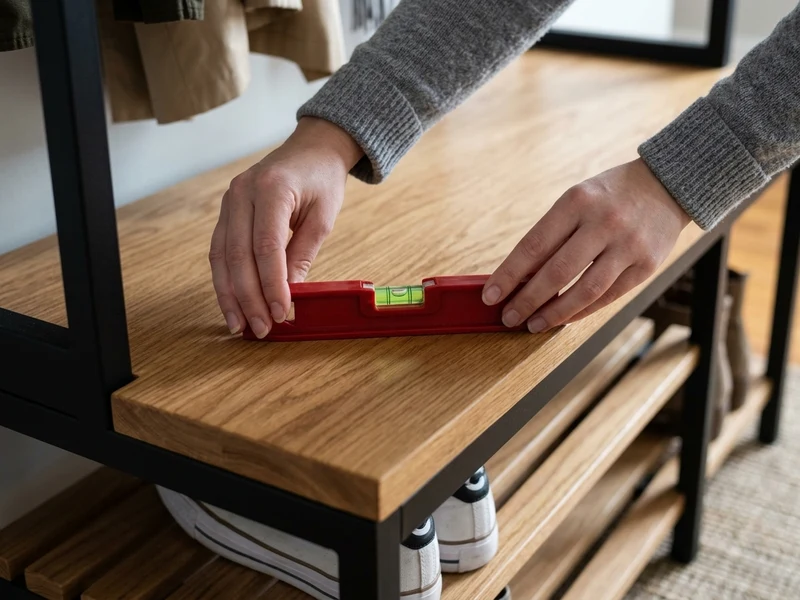
Place a compact torpedo bubble level flat on the wooden bench surface. Older apartment subfloors often settle over time; floor slope deviations exceeding 0.25 inches across a 3-foot span require furniture equipped with adjustable screw-in leveling glides to establish a plumb center of gravity.
Rotate each corner glide until the bubble centers cleanly. Account for baseboard trim that typically measures 3 inches to 6 inches in height by adjusting the rear foot glides or adhering dense felt standoff bumpers to the upper rear frame so the unit stands upright without leaning.
Step 4: Stabilize Against Tip-Over Hazards Without Wall Anchors
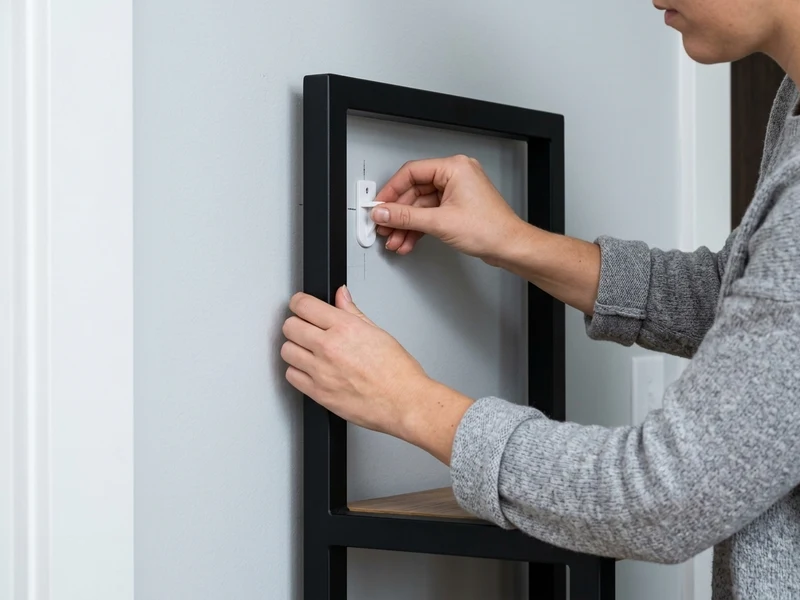
Furniture stability is paramount in active entryways where heavy winter coats or loaded bags are retrieved quickly. Instead of drilling expansion anchors into drywall, combine mechanical ballasting with non-invasive adhesive safety anchors.
First, ballast the base by filling lower shelves with 6 pairs to 9 pairs of shoes or heavy storage bins. Second, clean drywall contact surfaces with a 70% isopropyl alcohol wipe, allow around 10 minutes of drying time, and press adhesive brackets firmly for approximately 30 seconds. These adhesive furniture anti-tip safety straps deliver up to 200 pounds of dynamic shear resistance without drilling screws into drywall.
Step 5: Add Modular Magnetic Hooks and Tension Organizers
If your apartment features a solid steel entrance door, attach heavy-duty N52 neodymium magnetic hooks directly to the interior door face. These deliver 25 pounds to 30 pounds of direct pull strength and 8 pounds to 10 pounds of vertical shear capacity on solid steel entrance doors, holding dog leashes, heavy backpacks, and umbrellas without adhesive pads.
In narrow corridors where floor space is limited, erect floor-to-ceiling spring-tension organizer poles that span 7 feet to 10 feet (84 inches to 120 inches) to support 50 pounds to 70 pounds of vertical hanging gear without fasteners. For utility closets, add over-the-door utility organizers that fit doors measuring 1.375 inches to 1.75 inches thick, lined with 1 millimeter to 2 millimeters thick dense EVA foam padding to prevent rattles and scuffs.
Move-Out Removal: Safe Hallway Extraction Protocol
When preparing to relocate, dismantling your no-drill entryway storage takes only a few minutes and preserves rental walls and trim in pristine condition:
- Unload All Garments and Footwear: Remove all jackets, bags, shoes, and accessories from the hall tree, tension poles, and door hooks before moving hardware.
- Release Adhesive Anti-Tip Straps: Disconnect the retention straps from the furniture frame. To remove adhesive wall brackets, grasp the exposed pull tab and pull the exposed release tab slowly straight downward parallel to the wall for 10 inches to 12 inches until the elastomeric strip releases cleanly from the drywall.
- Slide Magnetic Door Hooks: Rather than prying strong magnetic hooks outward, slide each magnetic base toward the outer edge of the steel door until the magnetic attraction releases smoothly.
- Compress and Remove Tension Poles: Compress the upper spring mechanism of tension poles downward to release ceiling friction, then tilt the pole away from the ceiling and floor.
- Final Surface Inspection: Wipe any residual dust from baseboards and floors with a damp microfiber cloth. Confirm that drywall and trim remain intact and ready for inspection.
Related Rental Organization Guides
Explore our companion storage tutorials to maximize vertical space across every room in your rental apartment:
- Over-the-Door Organizing Hacks: Maximize interior door surfaces for coat, shoe, and utility storage.
- Tension Pole Shelving Guide: Build floor-to-ceiling storage towers without drywall screws.
- Under-Sink Organization Guide for Rentals: Organize awkward plumbing cabinets with sliding trays and pipe bridges.
- No-Drill Gallery Wall Guide: Hang framed prints and decorative art safely without drywall anchors.
- Full-Length Mirror Hanging Guide: Secure heavy dressing mirrors without nails or wall damage.
Frequently Asked Questions About Entryway Storage
How do you stabilize a heavy hall tree without screwing it into apartment drywall?
Stabilizing a freestanding hall tree without wall screws combines weight distribution and adhesive safety anchors. Placing heavy winter boots, toolboxes, or weighted storage bins on the lower shelf lowers the furniture center of gravity. For additional tip-over prevention, install adhesive furniture anti-tip safety straps that deliver up to 200 pounds of dynamic shear resistance without drilling screws into drywall.
Can tension-pole coat racks hold heavy winter coats without slipping?
Yes, heavy-duty floor-to-ceiling tension poles engineered with internal industrial compression springs and non-skid rubber feet can support 50 pounds to 70 pounds of vertical hanging gear across modular hooks. Ensure the pole is adjusted tightly between standard 7-foot to 10-foot ceilings and that the ceiling surface is rigid and dry.
Will magnetic hooks work on apartment front doors?
Magnetic hooks work reliably on fire-rated solid steel apartment doors, which are standard in multi-family residential buildings. High-grade N52 neodymium magnetic hooks equipped with silicone anti-scratch pads provide 25 pounds to 30 pounds of direct pull strength and 8 pounds to 10 pounds of vertical shear capacity, supporting heavy jackets, backpacks, and dog leashes without adhesives or screws.
How do you prevent over-the-door entryway hooks from scratching rental doors?
To prevent over-the-door brackets from scratching door paint or rattling during door movement, apply 1 millimeter to 2 millimeters thick dense EVA foam padding inside the bracket contact bends. This creates a protective cushion between the metal bracket and painted door trim while maintaining a smooth door closing action.
